
What upsets me more than politically disillusioned voters ignorance, is how media mostly ignores small political parties.
Recently, the Berlin Chamber of Industry and Commerce (IHK) sent an email outlining the results of its research on the positions of the parties currently represented in the Senate on specific political issues: climate, industry, rents, taxes, highway expansion, and airport costs. This is indeed very helpful, especially since there are only a few other parties on the ballot for the first vote. However, much like the reporting and commentary in newspapers and television stations before the federal elections, it can easily create the impression that there are no other options. Some even explicitly warn against “wasting” one’s vote by marking a ballot for a small party.
What is my vote even worth?
Let’s be honest: my single vote has not great value. Even as a priviled ageing man living in one of the richest countries of the world, my influence is limited. Unfortunately, even conversations and articles like this one will probably do little to change things, just as Elon Musk couldn’t care less that I’m trying to boycott Twitter. But what happens when I’m not the only one is clearly illustrated by the example of Twitter and Tesla. Advertisers withdraw, stock prices fall, and public popularity dwindles and reverses.
On the other hand, I’ve also marched peacefully through the city with tens of thousands of other people at Fridays for Future, and half a million people protested in front of the Russian embassy against the attack on Ukraine, and yet not much has changed. Above all, the press practically ignored both events compared to much smaller ones that probably fit their narratives better.
If the significance of my individual vote is relatively small, why shouldn’t I be allowed to “give it away” to small parties? I am allowed to, I can, and I will do so, and I will campaign to ensure that these people are taken seriously.
Small Parties as Inspirators
In my youth, I was always told it was wrong to vote for the Green Party, as they wouldn’t clear the 5% hurdle, meaning that the Social Democrats would miss out on that vote, ultimately benefiting the Christian Democrats. While this calculation might have had some tactical merit, it also led to almost everyone voting for either the CDU or the SPD for decades, even though after Willy Brandt, Helmut Schmidt, and Helmut Kohl, nearly all other leading politicians seemed quite unpopular.
The Greens are one of the few parties that unexpectedly became large and significant. Others, like the Pirates, never became a majority-capable mainstream party, which they didn’t even want to be. However, they were able to introduce issues into the political debate that others have since adopted. The AfD, too, is probably no longer a small party for good reason. They addressed some problems that others preferred to ignore. But in my view, their responses clearly show that they, too, would not be a good alternative for Germany.
Perhaps Volt, Klimaliste, ÖDP or Tierschutzpartei will never become big, but their issues are important, and for that reason alone it would be wrong to ignore them in political discussions.
Briefwahl als Abendlektüre
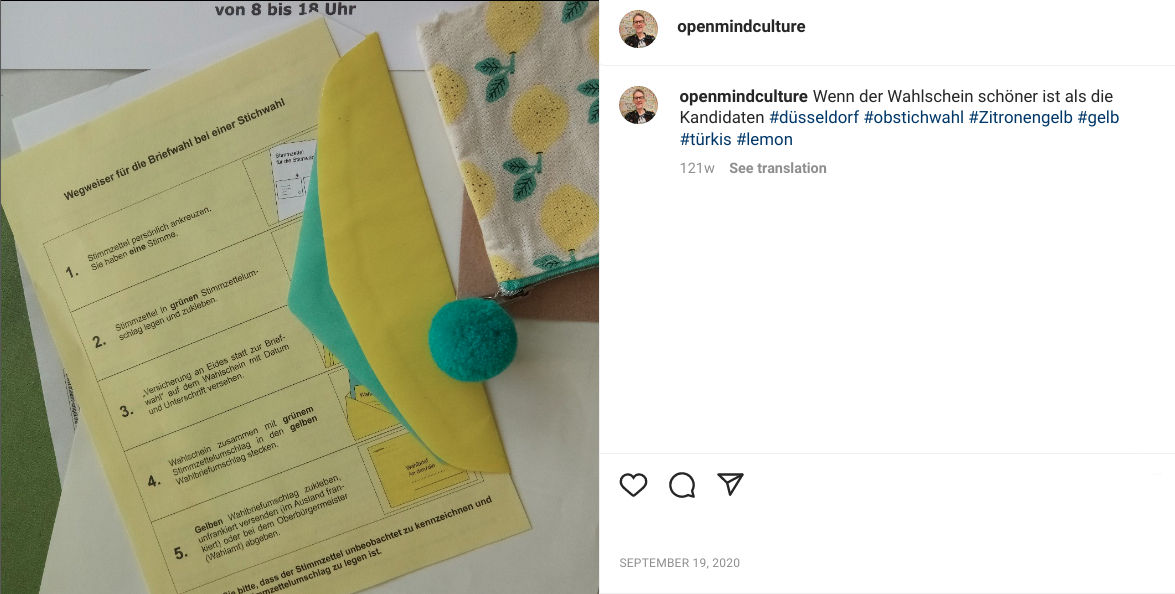
I like to read my ballot papers carefully and research unfamiliar lists and candidates, even if I’ve already made up my mind. A hip-hop party? Turkish names? A street musician called “The Naked Cowboy” as a mayoral candidate for Düsseldorf?
Postal voting gives me the time to appreciate those who are politically active, and that includes those on the right. Get involved! If your greatest wish in life is to live in an empire, then go to a tailor, have some beautiful uniforms made, and put your face and name on the ballot. Perhaps there are also patriots among them who don’t believe in blood and race and who understand that protecting nature also means protecting our homeland. But then you might also be interested to know that the well-known Greens aren’t the only party that advocates for environmental protection, and that there are indeed conservative alternatives.
Bigger Chances at Local and European Elections
Local politics often operates under different rules than federal elections. While the usual 5% threshold and voting age of 18 apply in the Berlin House of Representatives, 16-year-olds can vote for district councils, where 3% of the votes are sufficient. Voting rights for foreigners can also vary at the local level, and there are often parties or candidates with a migration background who could represent a serious alternative for politically disillusioned migrant workers.
Berlin’s Klimaliste (climate list) is not eligible for the first vote in the Berlin election repeat, but it is eligible for the second vote and on the third ballot, the one for the district council, at least where I live.
In Düsseldorf, my former hometown, the Climate List has joined forces with the satirical party “Die PARTEI” to form a parliamentary group and has been represented on the city council since the last election. Die PARTEI, in turn, also holds seats in the European Parliament, where Nico Semsrott has already used his speaking time for memorable protest actions.
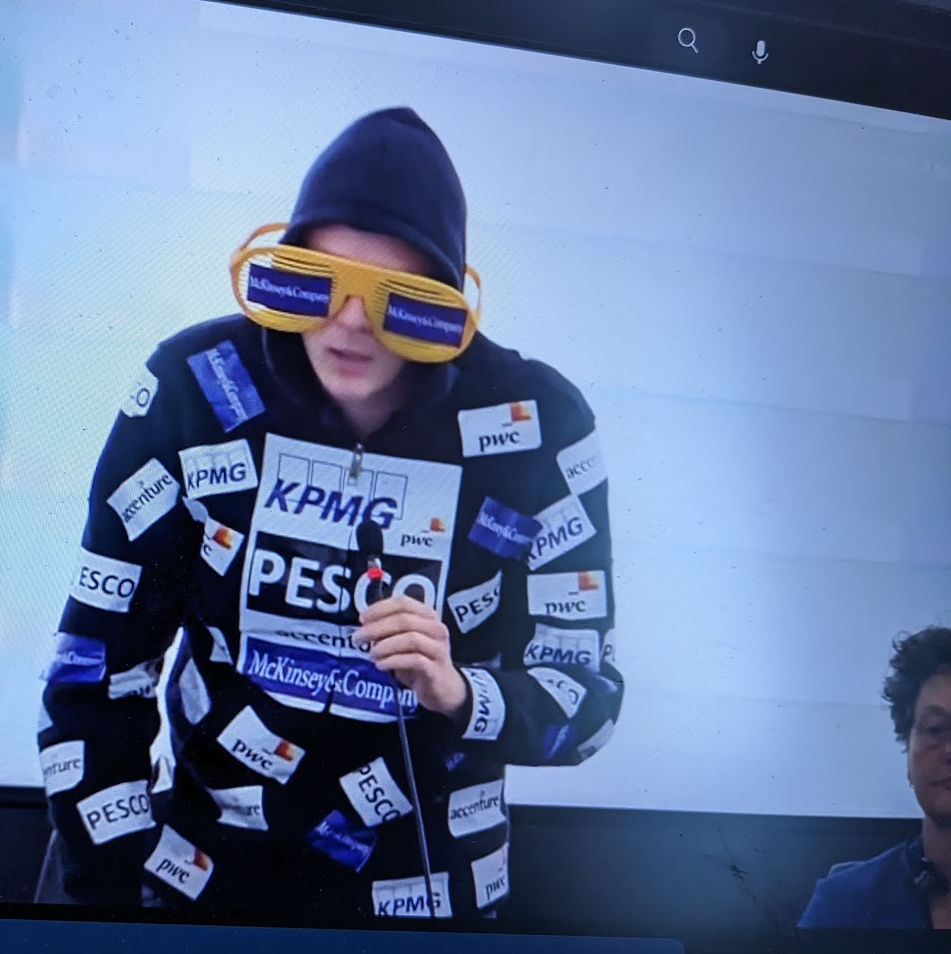
Looking at other European countries suggests that comedians can successfully transition into politics, perhaps because they are the last ones who have retained a bit of authenticity?
This article is not an endorsement of any specific party, but a very clear recommendation to exercise your right to vote and not to ignore the seemingly insignificant small parties.